
Submit a request, and we will call you back within 5 minutes
Book a room
Submit a request, and we will call you back within 5 minutes.


The name of the village of Sereda in the Shakhovskaya District comes from the fact that markets were held there on Wednesdays during winter. Until the mid-17th century, the village was called Stratilatskoye, in honor of Saint Theodore Stratelates.
The first mention of the village of Sereda dates back to 1574.
In 1657, Tsar Alexei Mikhailovich granted Patriarch Nikon the Stratilatskaya wasteland, together with its small settlements and villages, as an estate.
In 1686, a new Church of Theodore Stratelates was built on the site of the old church. Since the 1760s, an annual fair has been held in Sereda on June 21, the patronal feast day of Theodore Stratelates. From a small marketplace, Sereda gradually developed into a major trading village.
In 1734, the village acquired its second name, Sereda, because markets were held there on Wednesdays.
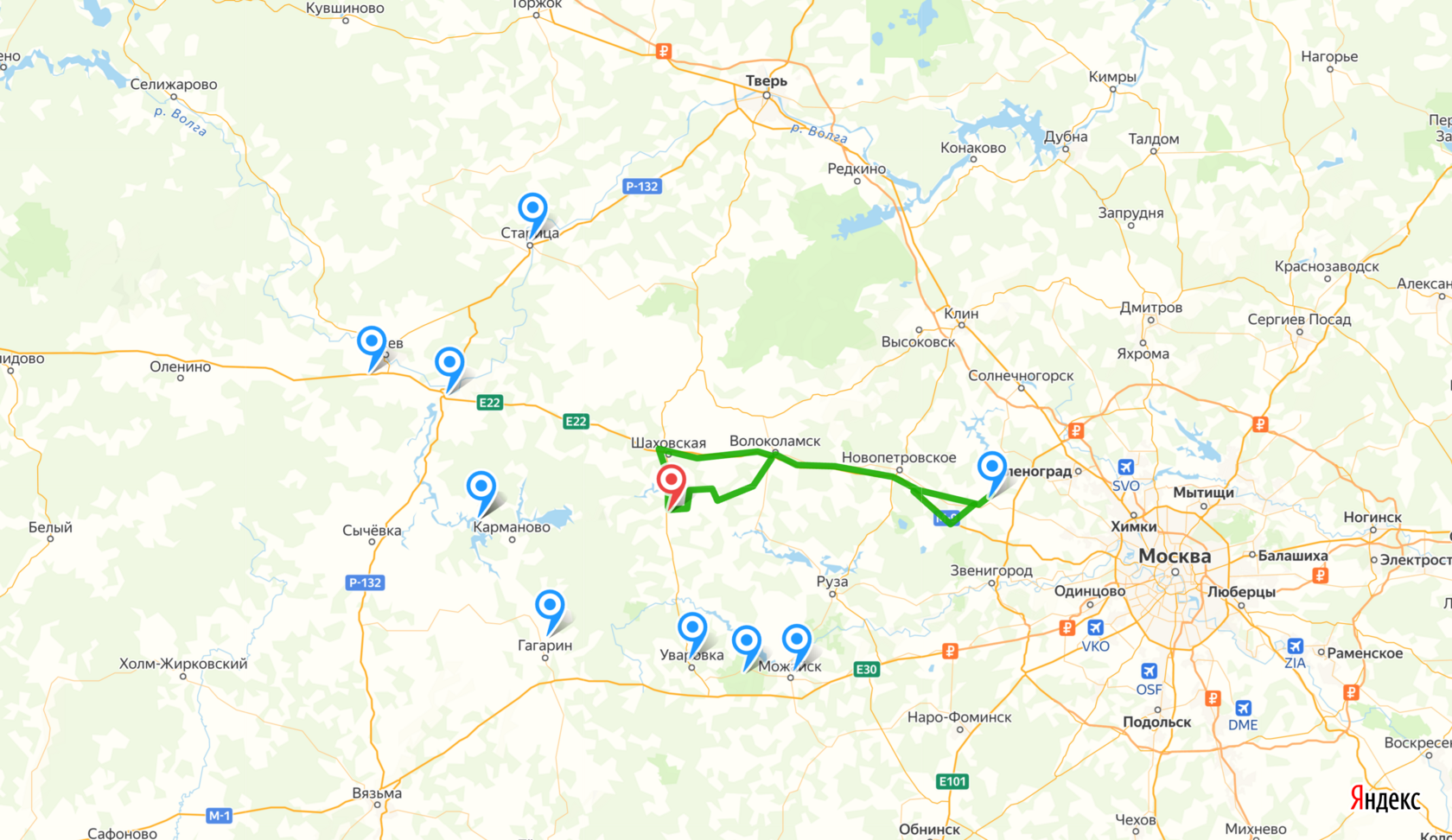
Sereda is located in the heart of an area rich in historical attractions, with roads leading from it in every direction, just as they did in ancient times:
To the north — Tver, Staritsa
To the south — Mozhaysk and Kaluga, Gagarin
To the east — Moscow
To the west — Smolensk and Riga, Rzhev and Zubtsov
Sereda is one of the oldest villages in our region.
Tourism. Excursions. Historical Background

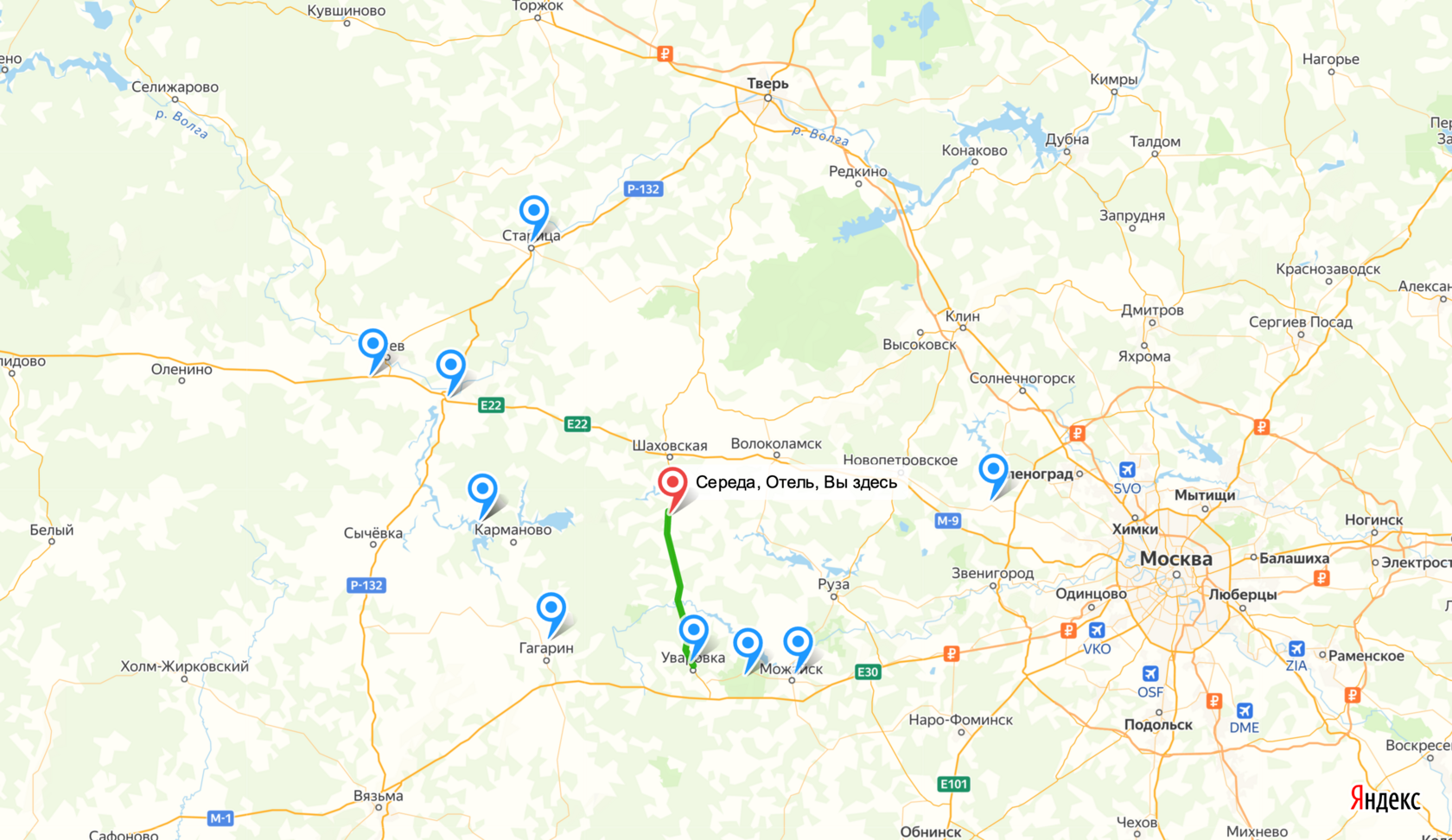
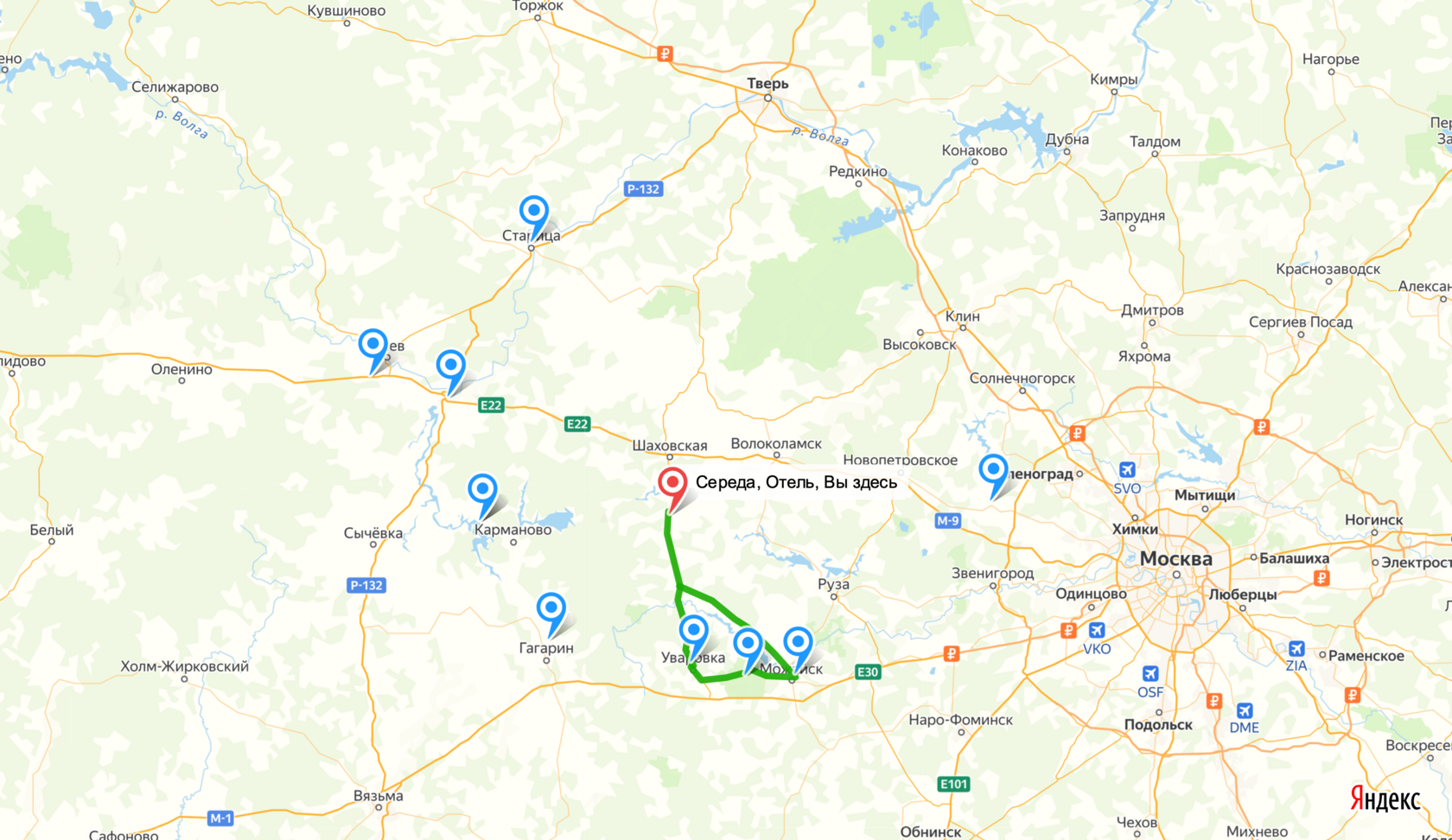
The journey begins at the Cathedral of the Dormition of the Most Holy Theotokos in Kolotsky Monastery, founded in 1413. — 30 minutes
The Dormition Kolotsky Monastery is located on the border between the Moscow and Smolensk lands. It is one of the oldest monasteries of the Moscow Diocese, founded in 1413 by Prince Andrei of Mozhaysk, son of Dmitry Donskoy. The discovery of the Koloch Icon of the Mother of God is associated with its appearance to a poor villager named Luka.
In ancient times, the monastery was surrounded by dense forests. Travelers wrote in 1675: "The road from Smolensk to Moscow is as dangerous because of bears as it is tedious because of the endless forests. The only road between these cities runs through a strip of cleared forest about 30 feet (9 meters) wide, with log walkways across the swamps. Between Moscow and Smolensk, there are only three towns: Dorogobuzh, Vyazma, and Mozhaysk"
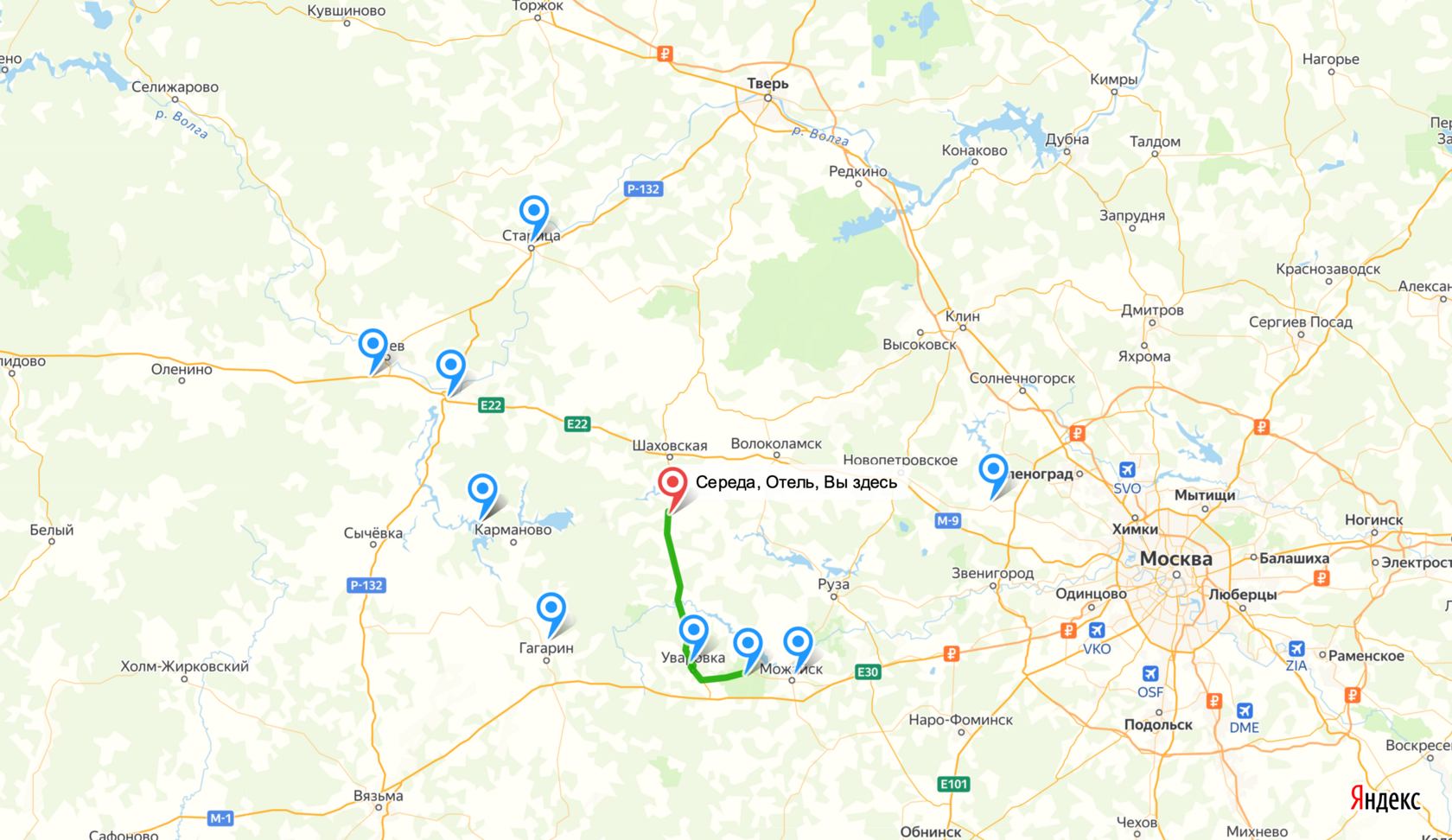
Next, a visit to the Borodino Battlefield — 3-hour excursion (Central Museum, Shevardino Redoubt, Spaso-Borodino Monastery, and Raevsky's grave).
The next stop is the Cathedral of St. Nicholas in Mozhaysk, dating back to 1231 — 30 minutes.
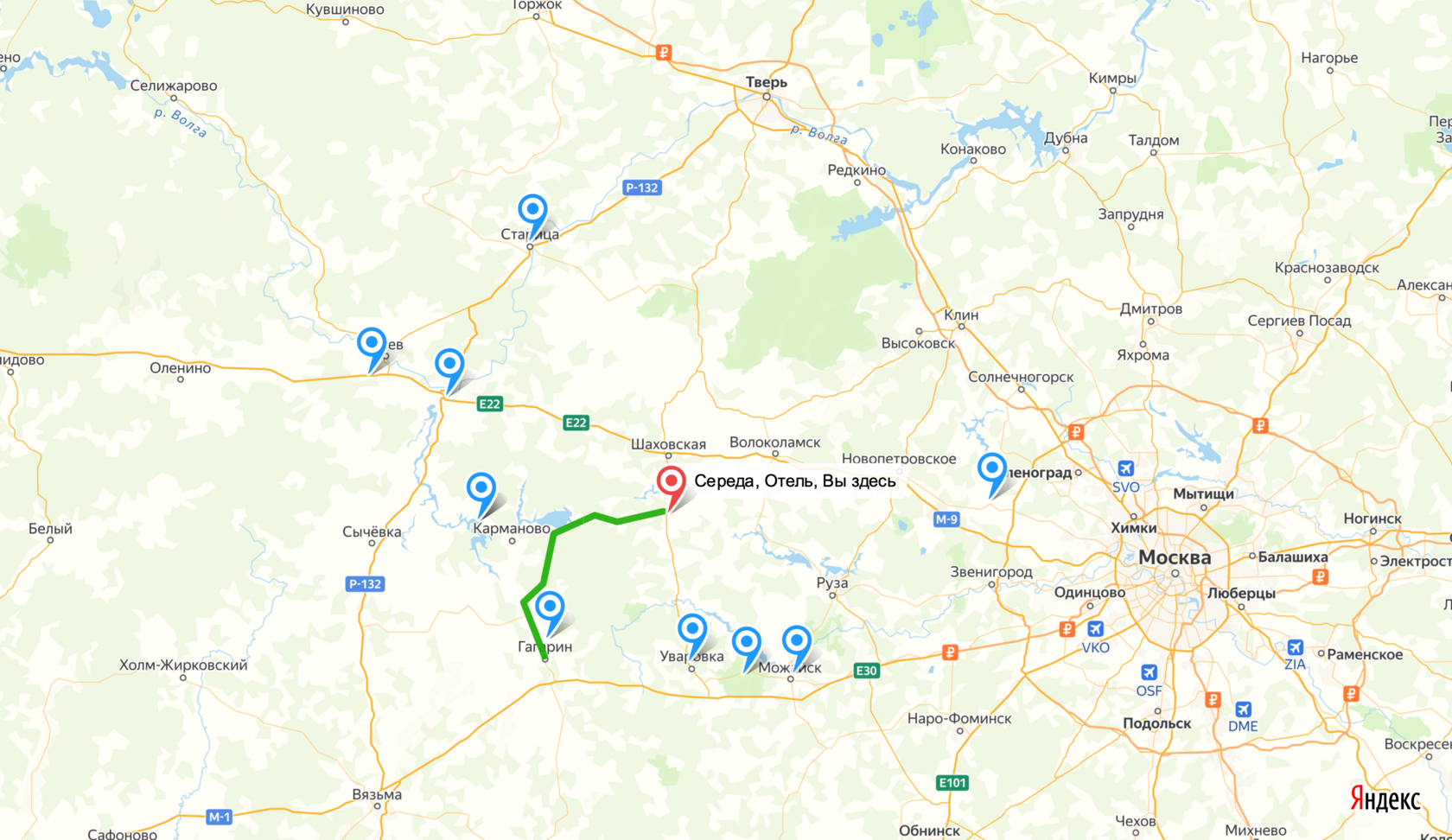
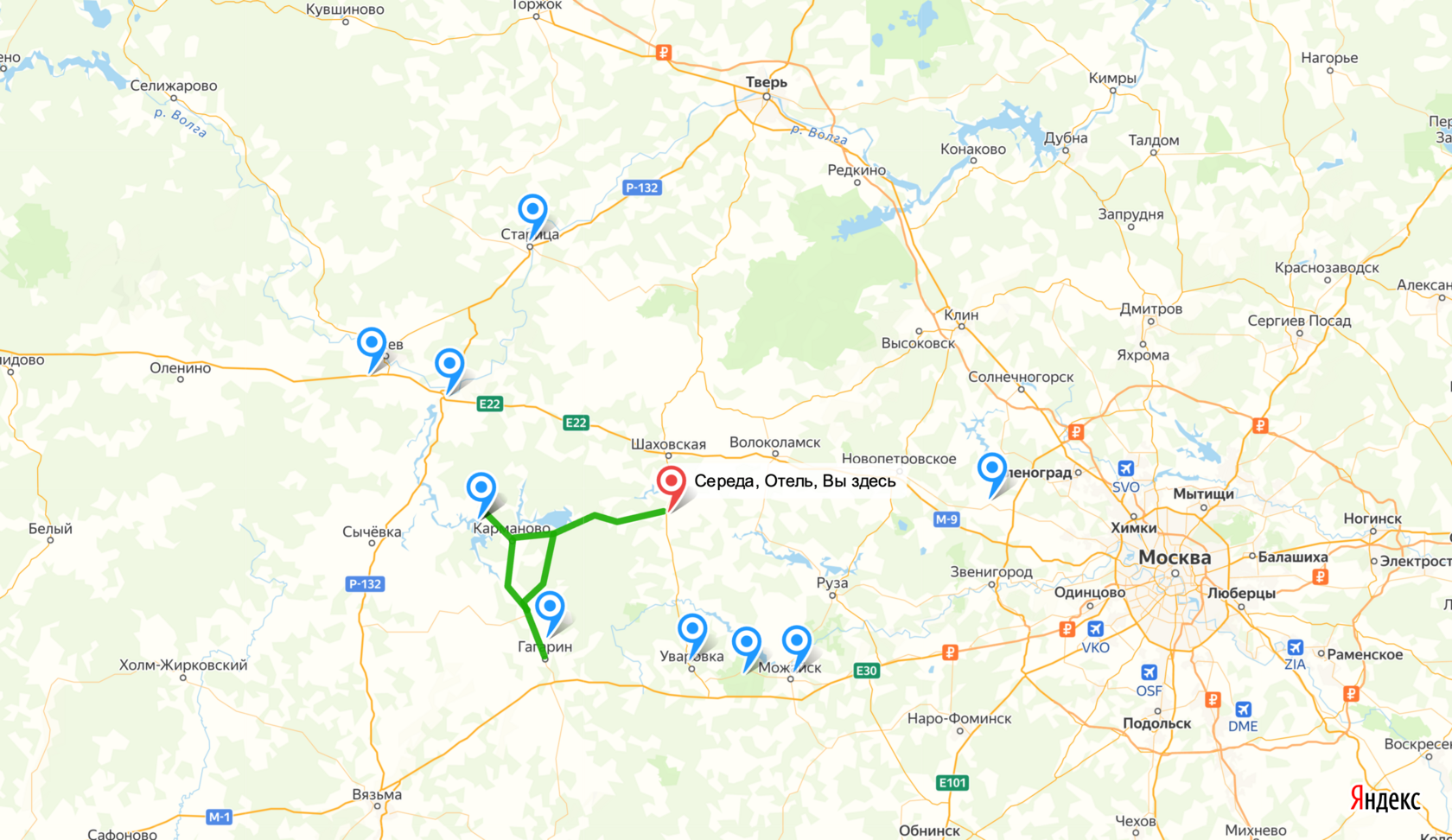
The Space City Gagarin

3 hours 33 minutes, total distance: 204 km, excluding excursions
The House Museum of Yuri Gagarin and His Parents, the Museum of the First Flight, and the Local History Museum.
Dinner at a restaurant on the shore of the Vazuzskoye Reservoir.
Phone number for table reservations: +7 (910) 712-08-02
https://vazuza-club.ru/restoran
Phone number for table reservations: +7 (910) 712-08-02
https://vazuza-club.ru/restoran

2 hours 50 minutes, total distance: 218 km, excluding excursions.
NewJerusalem — An Icon of the Holy Land
The Resurrection New Jerusalem Monastery (2-hour excursion) and the State Museum of History and Art (1.5-hour excursion).
The spiritual sky of Russia shines with countless stars reflecting the eternal light of the Kingdom of God. Among them, the brightest constellation is Russian Palestine — a geographical representation of the Holy Land created near Moscow according to the vision of His Holiness Nikon, Patriarch of Moscow and All Russia (1605–1681). The Church of the Holy Sepulchre in Jerusalem served as the model for the monastery's main cathedral.
The New Jerusalem Museum Complex has three permanent exhibitions. The first tells the history of the monastery, the second is dedicated to religious and secular art from the 16th to the early 20th century. The third displays gold and silver works by craftsmen of the 17th–20th centuries. In addition, the museum regularly hosts temporary exhibitions.

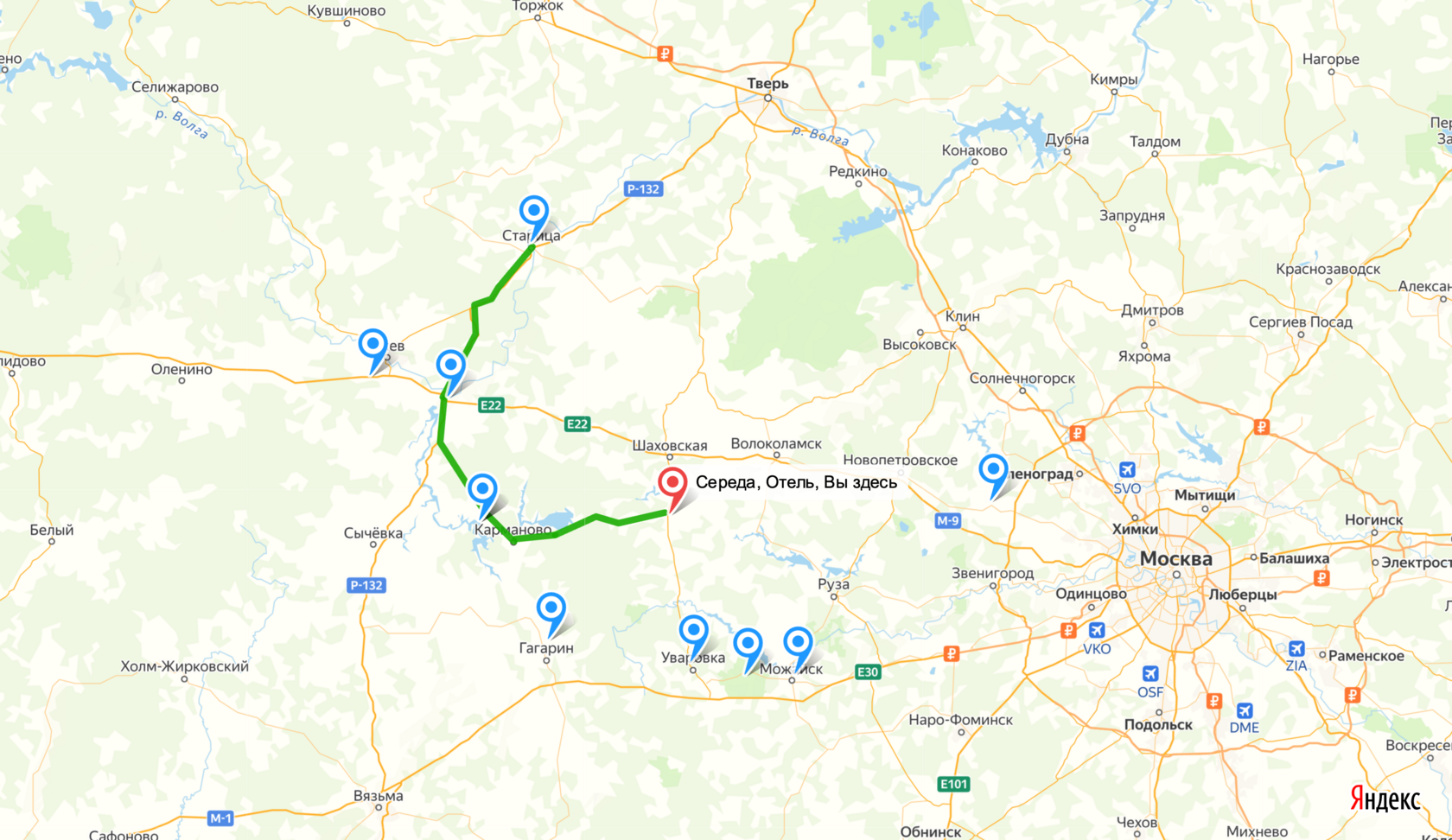
2 hours 25 minutes, total distance: 173 km, excluding excursions
Staritsa — An Ancient Russian Town on the Volga
Staritsa is a quiet, cozy provincial town with a relaxed pace of life. It has just over seven thousand residents, and you can feel it immediately. It was founded in 1297 by Prince Mikhail Yaroslavich of Tver.
Staritsa is part of the Pushkin Ring of the Upper Volga Region and, since 2021, the Greater Golden Ring of Russia. At the entrance to the town, you will immediately notice a portrait of Alexander Sergeyevich Pushkin, who visited the Dormition Monastery, the house of merchant Filippov, and the semi-rotunda on the descent to the former Market Square.
Staritsa is part of the Pushkin Ring of the Upper Volga Region and, since 2021, the Greater Golden Ring of Russia. At the entrance to the town, you will immediately notice a portrait of Alexander Sergeyevich Pushkin, who visited the Dormition Monastery, the house of merchant Filippov, and the semi-rotunda on the descent to the former Market Square.
- Holy Dormition Monastery. Founded in 1110, this historic architectural site covers a large area and includes seven buildings constructed at different times.
- Church of Paraskeva Pyatnitsa. A church complex also known as the Church of the Nativity of the Virgin Mary. Its construction took almost 100 years, beginning in 1720.
- Staritsa Caves. Stretching for many kilometers along the banks of the Volga. The stone quarried there was used to build not only nearby churches but also the white-stone buildings of Moscow and churches in St. Petersburg.
- Merchant Filippov's House. Today, this building, featuring intricate wrought-iron balcony railings and an archway, houses the Department of Culture and the Civil Registry Office.
- Local History Museum. Here you can visit an exhibition of porcelain, glass, and ceramics, as well as the Museum of the Russian Stove.
- Seltsovskaya Cave. Inside, you can find stalactites, stalagmites, rock crystal, and citrine.
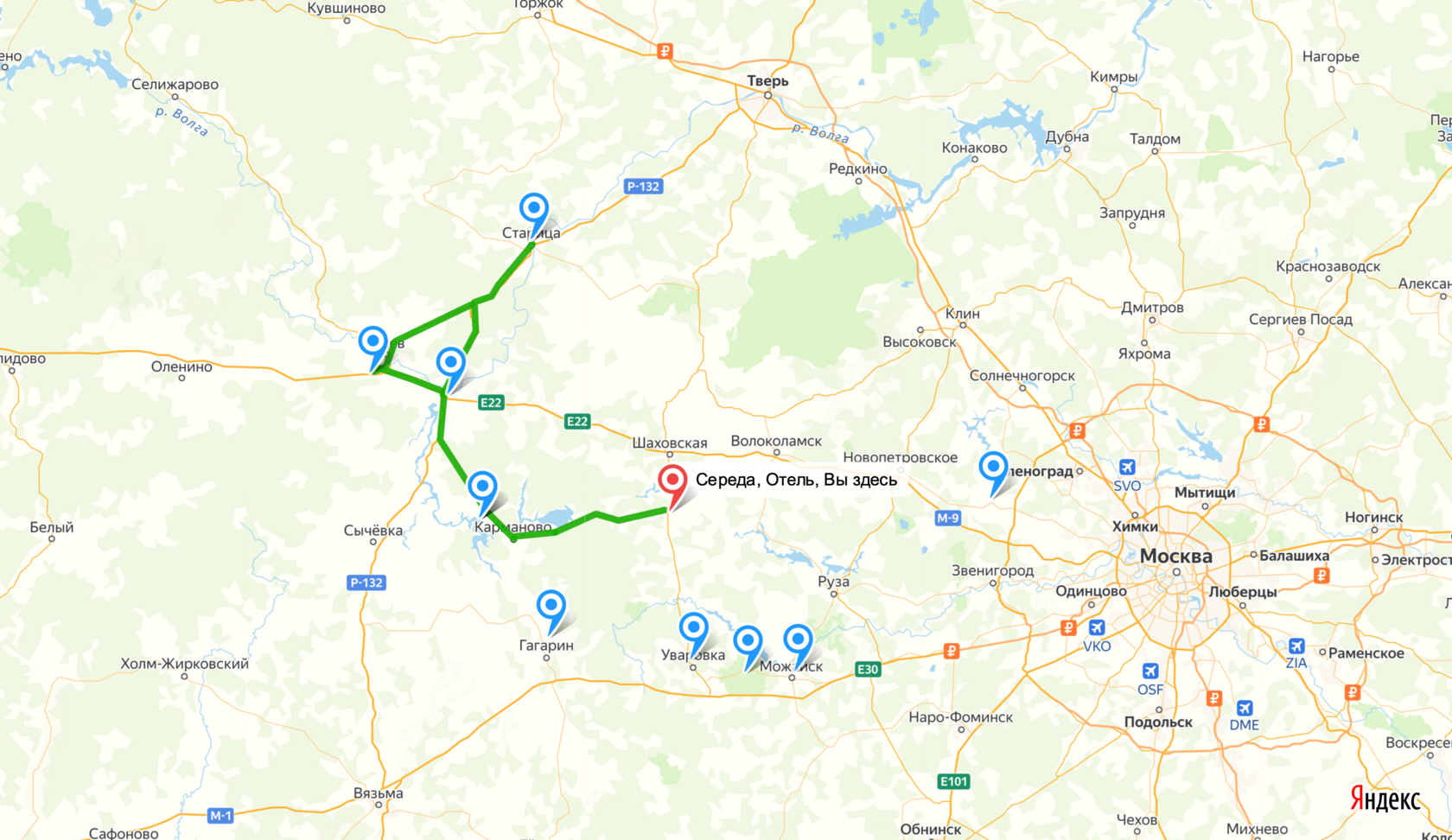
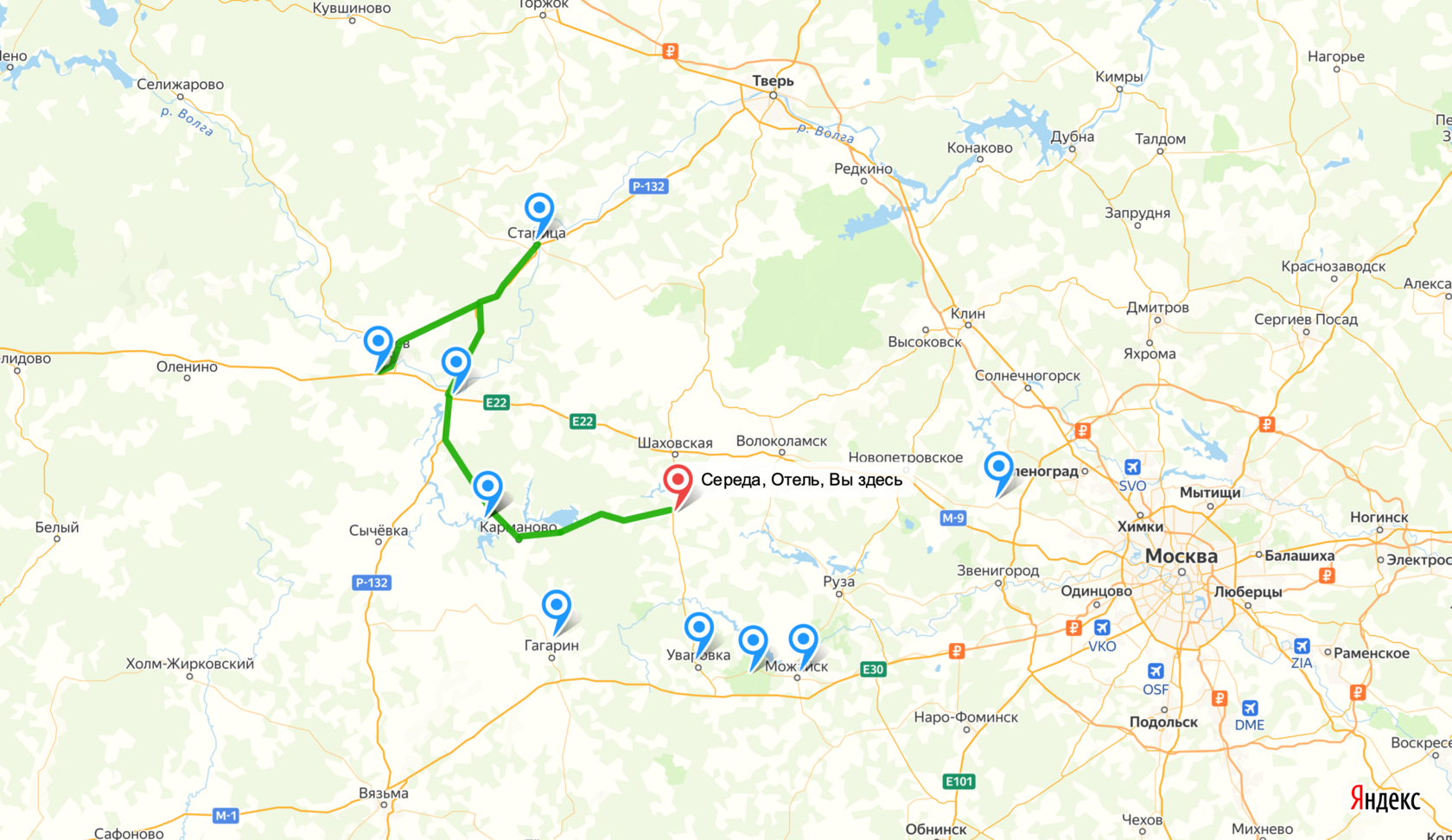
The Rzhev Memorial to the Soviet Soldier is a memorial complex dedicated to the Soviet soldiers who fell in the battles near Rzhev in 1942–1943 during the Great Patriotic War. It was erected in 2020 on the site of fierce fighting during the Rzhev-Vyazma Operation.
The town of Zubtsov is one of the oldest Russian towns. It was first mentioned in 1216.
The town is situated in a very picturesque location on the high banks of the Vazuza River, where it flows into the Volga. But this is not the Volga that everyone is used to seeing. The distance from the source of the Volga to Zubtsov is approximately 250 km (out of the river's total length of 3,500 km), so the river is only 80–90 meters wide here.



Stratilyatskaya
Guesthouse in Sereda
IP Pavel Afanasyevich Marin
INN 507900832784
INN 507900832784